

Inflation Might Be Here Sooner Than You Think: One Leaked Note Tells the Whole Story
What Is This Article About
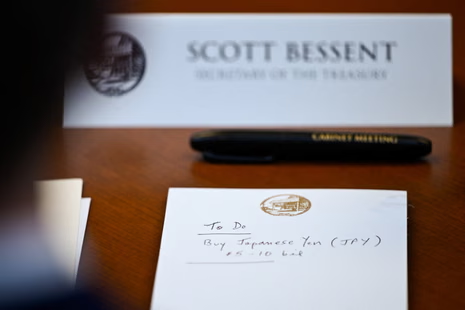
A photo of a handwritten note got published this week. It belongs to US Treasury Secretary Scott Bessent. The note said to buy $5 to $10 billion of Japanese yen. This happened the same week the US and Japan jointly stepped into the currency markets, and the same week US debt crossed $40 trillion. This article covers what happened and what it could mean for your money.
What Is Happening
The US and Japan jointly intervened to prop up the yen. This is the first time the US has helped defend another country's currency in 28 years. Right around then, a photo leaked showing Bessent's note: buy $5 to $10 billion in yen.
That number is small. The currency market trades over a trillion dollars a day. $5 to $10 billion barely moves it. That's why some people think the leak wasn't an accident.
Why It Is Happening
Two theories.
1) it's real, and the US is actually buying yen.
2) it was leaked on purpose, to scare traders away from betting against the yen.
If traders believe the US will defend the yen, they back off, and the yen strengthens on its own. No real money needed.
There's also a bigger picture.
The US wants three things at once:
1) bring factories home
2) keep prices stable
3) keep the economy strong.
You can only really have two. A weaker dollar helps factories come home, but it makes prices go up. Since bringing factories home and keeping the bond market stable are non-negotiable, price stability is what gets sacrificed. In plain terms, more inflation may be coming.
What Has Caused This
US debt jumped from $34.5 trillion to $40 trillion in about two years. No recession, no pandemic, no war caused it. That's just the current pace of borrowing.
Meanwhile, the Fed leaned toward a strong dollar. Markets didn't like it. Stocks fell, gold and Bitcoin fell, and the 30-year Treasury yield hit 5.27%, the highest since 2007. Higher rates make the $40 trillion debt cost more, which means more borrowing, which pushes rates even higher. It feeds itself.
Japan also owns more US debt than any other country. When the yen gets too weak, Japan sometimes sells US Treasuries to defend it. If Japan sells a lot at once, US borrowing costs could spike. So the US helping Japan isn't about friendship. It's about protecting itself.
How Will This Affect Americans
A weaker dollar makes imported goods cost more. But it also helps US factories compete, which could mean more US jobs over time.
Higher long-term rates affect mortgages, car loans, and business borrowing. And if this leads to more money printing down the road, that usually means more inflation, which eats into savings.
How Will This Affect the Rest of the World
If the yen snaps back too fast, it can trigger a "carry trade unwind." That's when investors who borrowed cheap yen to buy other assets have to sell everything to pay it back. This caused a fast global selloff in August 2024. It doesn't stay contained to Japan, it hits markets everywhere.
What Should a Normal American Expect
Expect more uncertainty. The theory is that markets may need to fall further before the government has cover to step in with stimulus. This has happened before, in 1998 and 2007, though those two played out very differently afterward.
This is a theory, not a guarantee. Nobody knows the timeline. Could be months, could be years, or it may not play out this way at all.
What Should They Do to Mitigate the Impact
Think of your money in two buckets: things that can be printed (dollars, bonds) and things that can't (gold, real assets, commodities). When governments print more money, the second bucket usually holds up better.
A few practical steps: keep an emergency fund, don't keep all your savings in cash if you're worried about a weaker dollar, and stay diversified. Even the experts don't know exactly how this plays out.
Future Action Items
Watch a few things: the 10-year and 30-year Treasury yields, the strength of the yen, and the price of gold. If yields rise while stocks fall, pressure is building. If gold rises while the dollar falls, that's a sign investors are hedging against a weaker dollar. Also watch for any shift in tone from the Fed, from fighting inflation to supporting growth.
Disclaimer:
I am not a financial advisor. This article is based on my interpretation of news that mixes reported events with speculation, and reflects my own personal views. It is not financial advice. Please do your own research or talk to a licensed financial advisor before making any financial decisions.
(edited)Inflation Might Be Here Sooner Than You Think: One Leaked Note Tells the Whole Story
What Is This Article About
A photo of a handwritten note got published this week. It belongs to US Treasury Secretary Scott Bessent. The note said to buy $5 to $10 billion of Japanese yen. This happened the same week the US and Japan jointly stepped into the currency markets, and the same week US debt crossed $40 trillion. This article covers what happened and what it could mean for your money.
What Is Happening
The US and Japan jointly intervened to prop up the yen. This is the first time the US has helped defend another country's currency in 28 years. Right around then, a photo leaked showing Bessent's note: buy $5 to $10 billion in yen.
That number is small. The currency market trades over a trillion dollars a day. $5 to $10 billion barely moves it. That's why some people think the leak wasn't an accident.
Why It Is Happening
Two theories.
1) it's real, and the US is actually buying yen.
2) it was leaked on purpose, to scare traders away from betting against the yen.
If traders believe the US will defend the yen, they back off, and the yen strengthens on its own. No real money needed.
There's also a bigger picture.
The US wants three things at once:
1) bring factories home
2) keep prices stable
3) keep the economy strong.
You can only really have two. A weaker dollar helps factories come home, but it makes prices go up. Since bringing factories home and keeping the bond market stable are non-negotiable, price stability is what gets sacrificed. In plain terms, more inflation may be coming.
What Has Caused This
US debt jumped from $34.5 trillion to $40 trillion in about two years. No recession, no pandemic, no war caused it. That's just the current pace of borrowing.
Meanwhile, the Fed leaned toward a strong dollar. Markets didn't like it. Stocks fell, gold and Bitcoin fell, and the 30-year Treasury yield hit 5.27%, the highest since 2007. Higher rates make the $40 trillion debt cost more, which means more borrowing, which pushes rates even higher. It feeds itself.
Japan also owns more US debt than any other country. When the yen gets too weak, Japan sometimes sells US Treasuries to defend it. If Japan sells a lot at once, US borrowing costs could spike. So the US helping Japan isn't about friendship. It's about protecting itself.
How Will This Affect Americans
A weaker dollar makes imported goods cost more. But it also helps US factories compete, which could mean more US jobs over time.
Higher long-term rates affect mortgages, car loans, and business borrowing. And if this leads to more money printing down the road, that usually means more inflation, which eats into savings.
How Will This Affect the Rest of the World
If the yen snaps back too fast, it can trigger a "carry trade unwind." That's when investors who borrowed cheap yen to buy other assets have to sell everything to pay it back. This caused a fast global selloff in August 2024. It doesn't stay contained to Japan, it hits markets everywhere.
What Should a Normal American Expect
Expect more uncertainty. The theory is that markets may need to fall further before the government has cover to step in with stimulus. This has happened before, in 1998 and 2007, though those two played out very differently afterward.
This is a theory, not a guarantee. Nobody knows the timeline. Could be months, could be years, or it may not play out this way at all.
What Should They Do to Mitigate the Impact
Think of your money in two buckets: things that can be printed (dollars, bonds) and things that can't (gold, real assets, commodities). When governments print more money, the second bucket usually holds up better.
A few practical steps: keep an emergency fund, don't keep all your savings in cash if you're worried about a weaker dollar, and stay diversified. Even the experts don't know exactly how this plays out.
Future Action Items
Watch a few things: the 10-year and 30-year Treasury yields, the strength of the yen, and the price of gold. If yields rise while stocks fall, pressure is building. If gold rises while the dollar falls, that's a sign investors are hedging against a weaker dollar. Also watch for any shift in tone from the Fed, from fighting inflation to supporting growth.
Disclaimer:
I am not a financial advisor. This article is based on my interpretation of news that mixes reported events with speculation, and reflects my own personal views. It is not financial advice. Please do your own research or talk to a licensed financial advisor before making any financial decisions.


Comments